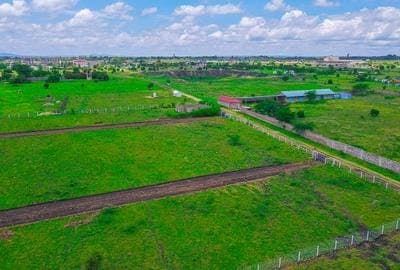
Ruiru offers diverse land options from residential plots to commercial acreage along Thika Road and Eastern Bypass corridors. Buyers find 1/8 to 1-acre parcels in gated communities and standalone titles. Due diligence on title deeds, zoning, and infrastructure access is essential before purchase.
Where Is Land Available in Ruiru?
Ruiru spans a broad corridor northeast of Nairobi along the A2 Thika Superhighway and the Eastern Bypass. Active land markets cluster around Ruiru town centre, Juja Farm, Mwiki, Membley, and the fast-growing areas near the Eastern Bypass interchange. Gated communities such as Tatu City, Ruiru East, and various private schemes offer serviced plots with internal roads, water, and power reticulation. Further out toward Kamakis and Gatundu, larger agricultural parcels and undeveloped acreage appear for buyers seeking scale or long-term hold strategies. Proximity to the Thika Road dual carriageway and the completed Eastern Bypass has compressed commute times to Westlands and the CBD, keeping demand steady across both residential and commercial segments.
What Types of Land Can You Buy in Ruiru?
Buyers encounter three main categories. Residential plots typically range from 1/8 acre (50×100 ft) in high-density schemes to 1/4 and 1/2 acre in lower-density estates. These suit owner-occupier builds or rental developments. Commercial and mixed-use frontage plots line Thika Road and the Eastern Bypass, suited for retail, showrooms, logistics yards, or apartment blocks — sizes vary from 1/4 acre corner sites to multi-acre assemblages. Agricultural and speculative acreage (1–50+ acres) sits further from the tarmac, often still under freehold or leasehold titles with agricultural zoning; conversion to residential or commercial use requires county approval. Leasehold terms of 99 years from the Government of Kenya are common; freehold titles exist in older adjudication sections. Always confirm the tenure and remaining lease term before negotiating.
What Should Buyers Check Before Committing?
Due diligence in Ruiru follows the same rigorous path as anywhere in Kenya. Start with an official search at the Ministry of Lands registry to confirm the registered proprietor, encumbrances (charges, cautions, restrictions), and title dimensions. Engage a licensed surveyor to beacon the boundaries on the ground and compare the resultant mutation form with the registry map — boundary disputes are common where older subdivision schemes lack physical markers. Verify zoning with Ruiru Municipality (Kiambu County) to ensure your intended use — residential, commercial, industrial — is permitted; change-of-user applications can take months and attract fees. Confirm access: is the plot on an all-weather road, or does it rely on a seasonal track or neighbour's goodwill? Check utility availability — Kenya Power connection timelines, water supply (Ruiru-Juja Water Company or borehole potential), and sewerage or septic feasibility. Finally, investigate any pending infrastructure projects (road widening, wayleaves, railway reserves) that could affect the parcel.
How to Verify Land Ownership and Title Deeds
The title deed is the primary evidence of ownership. In Ruiru, you will encounter freehold titles (absolute proprietorship) and leasehold certificates of title (99-year leases from the Commissioner of Lands). Request the original title from the seller and conduct a green card search at the lands registry to trace the property's history — previous transfers, charges, caveats, and any court orders. Cross-reference the title number, parcel number, and registered owner's ID with the seller's national ID and KRA PIN. If the land is held by a company, obtain a CR12 from the Registrar of Companies to confirm directors and shareholding. For deceased estates, insist on a grant of probate or letters of administration. Never rely solely on a sale agreement or mutation form; the registry search is the definitive check. Consider engaging a conveyancing advocate early — they will draft the sale agreement, manage completion documents (transfer, consent to transfer, clearance certificates), and lodge the transfer for registration.
Infrastructure and Access Considerations
Ruiru's appeal rests heavily on connectivity. The Thika Superhighway and Eastern Bypass provide arterial access, but internal estate roads vary from tarmacked to murram. Plots within gated schemes (e.g., Tatu City, Fourways Junction developments) typically have paved loop roads, street lighting, and storm drainage. Standalone plots off the main highway may require negotiating wayleaves with neighbours or applying for county road opening. Water supply is a critical filter: areas served by Ruiru-Juja Water and Sewerage Company have metered connections; others depend on boreholes — test yield and quality before committing. Kenya Power last-mile connectivity has improved, but three-phase supply for commercial loads may need a dedicated transformer. Fibre internet (Faiba, Zuku, Safaricom) reaches most peri-urban estates; confirm coverage if remote work or tech-enabled rentals are part of your plan. The upcoming Nairobi Commuter Rail stops at Ruiru and Mwiki stations add a public-transport premium for residential plots within walking distance.
Working with Professionals in Ruiru Land Transactions
A secure land purchase assembles a small team. A conveyancing advocate handles legal due diligence, sale agreement, and transfer registration. A licensed surveyor beacons boundaries and prepares mutation forms for subdivision or amalgamation. A valuer provides an independent market valuation — useful for negotiation, mortgage applications, and stamp duty assessment (4% of value for urban land). If financing with a mortgage, the bank will instruct its own valuer and advocate; align early to avoid duplicate costs. Property agents registered with the Estate Agents Registration Board (EARB) can source off-market deals and coordinate viewings. For a quick preliminary estimate before engaging a valuer, use our mortgage calculator to model repayments, or explore property valuation services in Kenya for professional appraisal. Understanding broader Kenya property market trends helps time your entry. Our property investment guide outlines yield and capital-growth frameworks relevant to Ruiru's trajectory.
Comparing Ruiru with Neighbouring Growth Corridors
Ruiru sits between Juja (university-driven rental demand) and Kamakis (industrial-logistics tilt). Kitengela, on the southern bypass, offers a parallel peri-urban dynamic — larger commercial acreage and established industrial zones. Buyers evaluating scale may review commercial land in Kitengela Balozi Road area, 100×100 commercial plots in Kitengela, 11-acre commercial parcels in Kitengela, or 5-acre commercial sites in Kitengela for comparative pricing. Residential investors sometimes cross-shop finished homes in Kitengela Chuna Estate against Ruiru build-to-rent models. For urban apartment benchmarks, Westlands luxury units illustrate the high-end rental ceiling that Ruiru satellite developments aspire to.
Next Steps for Serious Buyers
Define your use case — owner-occupied home, rental development, commercial yard, or land banking. Set a budget inclusive of stamp duty (4%), legal fees (1–1.5% + VAT), valuation (0.25–0.5%), agency commission (1–2%), and survey costs. Shortlist 5–10 parcels via PropertyFinder filters (location, size, tenure, price). Schedule physical viewings — walk boundaries, test road access in rain, talk to neighbours. Instruct your advocate to open a search file the moment you identify a preferred plot. Negotiate subject to clean search, beaconing, and county zoning confirmation. On completion, ensure the seller delivers the original title, signed transfer, consent to transfer, rates clearance, and rent clearance (for leasehold). Lodge transfer promptly; registration typically takes 30–60 days. Once the new title issues, update county records for rates and secure the property with a perimeter fence or hoarding.